Why Hybrid Events Matter for Disability Inclusion
Community events should be for everyone.
But for many people with disability, attending an event in person is not always simple. Even when an event is free, welcoming, and well-planned, there can still be barriers that make it hard or impossible for some people to attend.
Transport, distance, fatigue, health needs, sensory environments, caring responsibilities, support worker availability, anxiety, cost, and accessibility of the venue can all affect whether someone can take part.
That is why hybrid events matter.
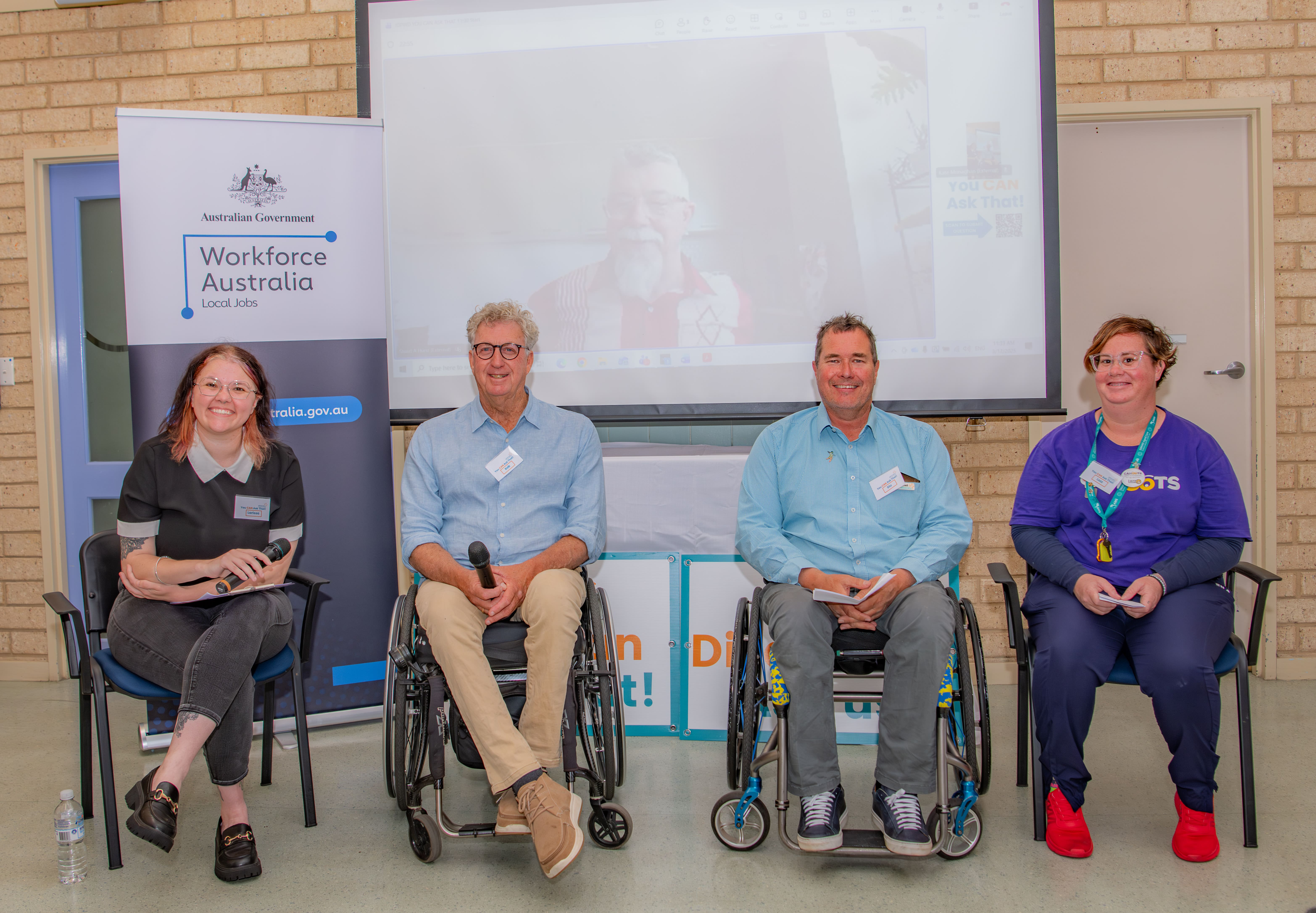
Hybrid events give people more than one way to participate. They usually include an in-person option and an online option, so people can choose what works best for them.
This is not just convenient.
It is inclusive.
Access looks different for everyone
There is no single way to make an event accessible for every person.
One person may need wheelchair access.
Another person may need captions.
Another person may need a quiet space.
Another person may need information in plain language.
Another person may need to attend from home because leaving the house is not possible that day.
Hybrid access recognises that people have different needs, preferences, energy levels, communication styles, and support arrangements.
It gives people choice.
And choice is a key part of inclusion.
Transport is a real barrier
Across regional and rural communities, transport can be one of the biggest barriers to participation.
Some people do not drive.
Some people cannot access reliable public transport.
Some people need accessible transport, which may be limited, expensive, or unavailable.
Some people rely on family, friends, support workers, or community transport to get to events.
This means attending a one-hour session can take a whole day of planning.
Hybrid options help reduce this barrier.
They mean someone can still access information, connection, and support, even when transport does not work out.
Distance should not decide who gets information
In the South West, communities are spread across a large region.
People may live far away from major towns, services, or event venues.
When important information is only offered in person, people in smaller towns and regional areas can miss out.
Hybrid events help bring information closer to people.
Someone might join from home, a library, a community centre, a local organisation, or a small group setting.
This means people can access information without always needing to travel long distances.
Where someone lives should not decide whether they can learn about their rights, services, supports, or opportunities.
Hybrid access supports health, energy, and safety
Some people may want to attend in person but cannot on the day.
They may be unwell.
They may be managing pain.
They may be experiencing fatigue.
They may need to avoid crowded spaces.
They may have anxiety or sensory access needs.
They may have caring responsibilities.
They may not have support available at the right time.
Hybrid access gives people another option.
It means participation does not have to be all or nothing.
A person may attend online one month and in person the next. They may watch from home with their camera off. They may join for part of a session, take a break, and return when they can.
That flexibility matters.
Online access can make participation easier
For some people, online access can make it easier to engage.
Being in a familiar environment can help people feel safer and more comfortable.
People may be able to manage lighting, noise, seating, food, medication, breaks, sensory tools, or support needs more easily at home.
Online events can also allow people to use accessibility tools such as captions, screen readers, chat functions, or communication devices.
Some people may feel more confident asking questions in the chat rather than speaking in front of a room.
Accessibility is not only about getting into a building.
It is also about being able to participate in a way that works for you.
In-person connection still matters
Hybrid does not mean replacing face-to-face connection.
In-person events are still important.
They can help people meet others, build relationships, share stories, and feel part of their local community.
For some people, attending in person is the best and most meaningful option.
Hybrid access is about adding choice, not taking it away.
It means people who want to attend in person can still do that, while people who cannot attend physically are not excluded.
Inclusion works best when people have options.
Hybrid events need planning
A hybrid event is more than putting a laptop in the corner of the room.
To work well, hybrid access needs to be planned properly.
Organisers should think about:
How online participants will hear and see the session
Whether captions are available
How questions will be taken from online participants
Whether slides or resources can be shared before or after the event
Whether the language is clear and easy to understand
How people can ask for adjustments
Whether someone is responsible for supporting the online space
How online participants will be included in discussions
Whether the event link is easy to find and use
Good hybrid events make online participants feel included, not like an afterthought.
Hybrid access benefits more than one group
Hybrid events can support many different people.
They can help people with disability, carers, families, support workers, older people, people without transport, people in regional areas, people with health needs, people who work during the day, and people who feel safer participating from home.
They can also help organisations reach more people.
When more people can attend, more voices are heard.
This leads to better conversations, better feedback, and stronger communities.
Inclusion means removing barriers
At its heart, hybrid access is about removing barriers.
If we know that transport, distance, health, sensory needs, and support availability stop people from attending, then we need to create other pathways in.
Accessibility should not rely on people pushing through barriers.
It should be built into the way we plan.
Hybrid events are one practical way to say:
You are welcome.
Your access needs matter.
Your participation matters.
We will make space for you to join in a way that works.
A step towards a more inclusive South West
Advocacy WA’s vision is to help make the South West more inclusive and accessible.
Hybrid events are one part of that bigger picture.
They help bring information, training, rights education, peer connection, and community conversations to more people in more places.
They also remind us that inclusion is not about offering one pathway and expecting everyone to fit into it.
It is about creating flexible options so more people can belong.


.png)
.png)
.png)
.png)
.png)


.png)
.png)
.png)
.png)
.png)
.png)
.png)


.png)
.png)


.png)


.png)
.png)
.png)
.png)
.png)

.png)
.png)
.png)
.png)
.png)

.png)
.png)

.png)
.png)