Accessibility Is More Than Ramps
When people hear the word accessibility, they often think about ramps, lifts, accessible toilets, and parking bays.
These things are important.
Physical access matters. A person should be able to enter a building, move through a space, use the bathroom, reach service counters, and take part in community life without unnecessary barriers.
But accessibility is much bigger than ramps.
Accessibility is about whether people can truly participate.
It includes how people enter a space, how they receive information, how they communicate, how they are treated, how safe they feel, and whether the environment works for different bodies, minds, senses, and ways of moving through the world.
Physical access matters
Physical access is often the most visible part of accessibility.
It includes things like:
Accessible parking close to the entrance
Step-free pathways
Ramps with safe gradients
Working lifts
Wide doorways
Accessible toilets
Clear signs
Safe flooring
Space for people using mobility aids
Seats for people who cannot stand for long periods
Good lighting
Emergency exits that work for everyone
When physical access is missing, people can be excluded before they even get through the door.
A venue might have a great event, service, or program, but if a person cannot safely get inside, they cannot participate.
Sensory access matters
Some people experience environments differently.
Noise, bright lights, crowds, smells, movement, and visual clutter can make a space overwhelming, painful, unsafe, or exhausting.
Sensory access means thinking about how a space feels, sounds, smells, and moves.
This might include:
Providing a quieter space
Reducing unnecessary background noise
Using softer lighting where possible
Avoiding strong smells
Offering clear information about what to expect
Letting people know if there will be loud music, flashing lights, crowds, or sudden noises
Creating chill out spaces or sensory spaces
Allowing people to come and go as needed
Sensory access is not about removing all stimulation for everyone. It is about giving people options, information, and places to regulate.
Communication access matters
Accessibility also means making sure people can understand and use information.
Not everyone communicates or processes information in the same way.
Some people may need plain language. Some may need Easy Read. Some may use Auslan, communication devices, interpreters, pictures, written information, or extra time.
Communication access might include:
Using plain English
Providing Easy Read information
Speaking clearly and respectfully
Giving people time to answer
Checking understanding without being patronising
Offering written information before meetings
Using visual supports
Providing captions on videos
Offering Auslan interpreters when needed
Making forms easier to understand
Avoiding jargon
Communication access helps people make informed choices.
When information is not accessible, people can be left out of decisions that affect their lives.
Digital access matters
More and more services, events, forms, information, and bookings are online.
This means digital accessibility is essential.
A website, social media post, email, or online form should be easy to find, read, understand, and use.
Digital access might include:
Using clear headings
Writing in plain language
Adding captions to videos
Using image descriptions or alt text
Making links clear
Ensuring websites work with screen readers
Using good colour contrast
Making forms simple and accessible
Avoiding information that is only shown in images
Providing phone or in-person options when online forms are hard to use
Digital access is not just a technical issue. It is a participation issue.
If people cannot access information online, they may miss out on services, events, support, employment, education, and community connection.
Attitudes matter
One of the biggest accessibility barriers is not a step, a form, or a website.
It is attitude.
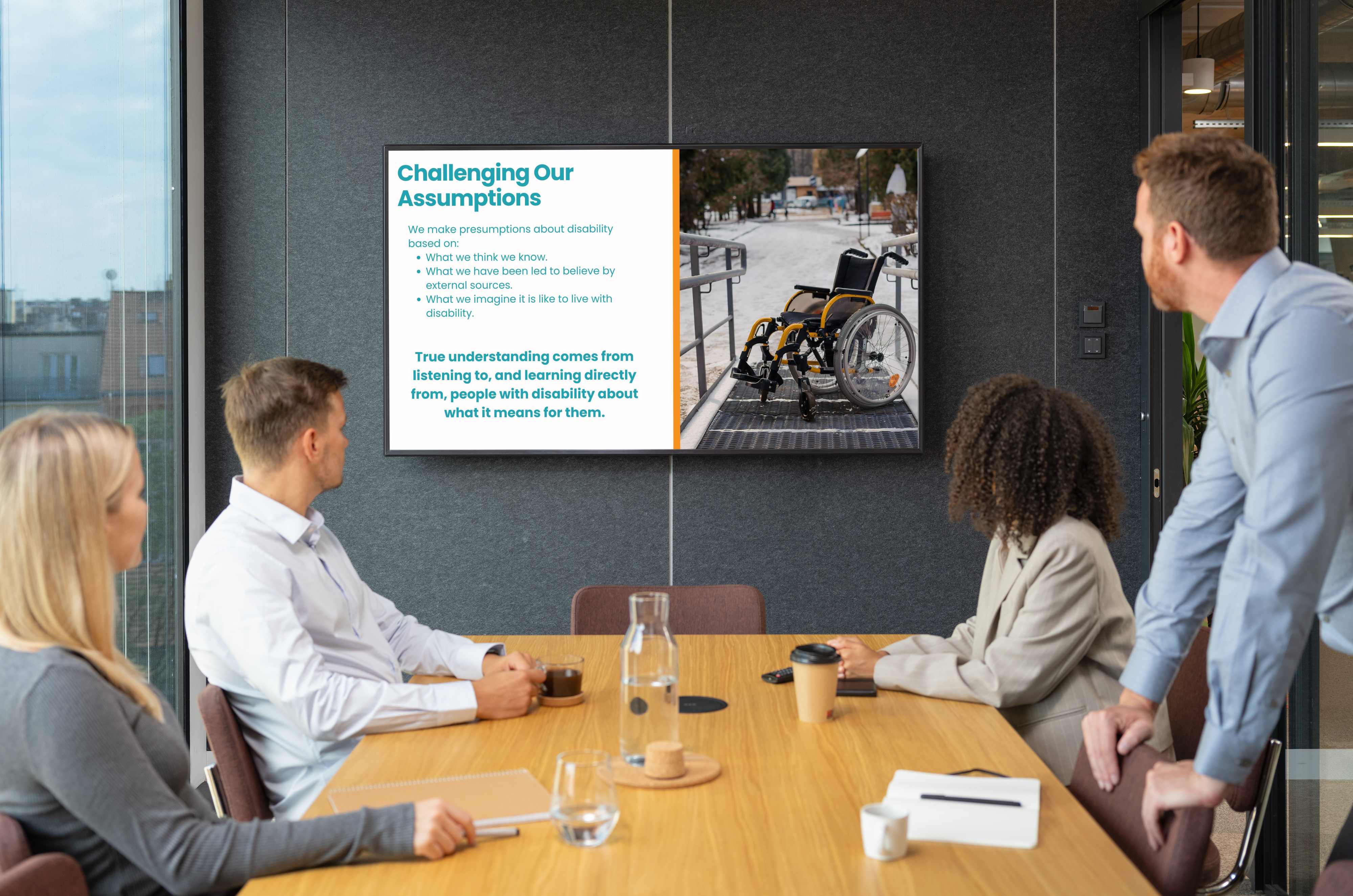
People with disability are often excluded because of assumptions about what they can do, what they need, or whether they belong in a space.
Attitudinal barriers can look like:
Speaking to a support person instead of the person
Assuming someone cannot understand
Treating access requests as a burden
Using disrespectful language
Making decisions without lived experience input
Ignoring feedback
Expecting people with disability to be grateful for basic access
Seeing accessibility as “extra” instead of essential
A space can have a ramp and still feel unsafe or unwelcoming if people are treated poorly.
True accessibility includes respect.
Social access matters
Accessibility is also about whether people feel welcome to take part.
A venue or service might technically be accessible, but people may still feel excluded if the environment is confusing, rushed, judgemental, or not designed with different needs in mind.
Social access might include:
Friendly and respectful staff
Clear information about what to expect
Flexible participation options
Welcoming support people
Allowing breaks
Making space for different communication styles
Checking whether people need adjustments
Reducing pressure to participate in only one way
Creating spaces where people feel safe to ask questions
Social access helps people feel that they belong, not just that they are allowed through the door.
Accessibility should be planned from the beginning
Too often, accessibility is added at the end.
An event is planned, a building is designed, a form is created, or a service is launched, and only then does someone ask, “What about access?”
By then, barriers may already be built in.
Accessibility works best when it is included from the start.
This means asking:
Who might be excluded?
What barriers could people face?
How will people find information?
Can people physically enter and move through the space?
Is the information easy to understand?
Are there sensory considerations?
Can people participate in different ways?
Have people with disability been involved in planning?
What adjustments can we offer?
Good access is not about guessing. It is about listening.
Lived experience makes accessibility stronger
People with disability are experts in their own access needs and experiences.
Their knowledge should be included in planning, decision-making, and evaluation.
This does not mean asking one person to speak for everyone. Disability is diverse. Access needs are different.
But when organisations listen to a range of lived experiences, they make better choices.
They notice barriers they may have missed.
They create services that work for more people.
They build trust.
They move from good intentions to real inclusion.
Small changes can make a big difference
Accessibility does not always require a major renovation or a large budget.
Sometimes small changes can make a meaningful difference.
For example:
Sending information before a meeting
Adding captions to a video
Using plain language
Providing a quiet space
Checking if someone needs a break
Moving furniture to create more space
Making signs clearer
Offering different ways to book or register
Training staff in disability awareness
Asking people what works for them
Small changes show people they have been considered.
They can also make spaces better for everyone.
Accessibility benefits the whole community
Accessible design does not only help people with disability.
It can help older people, parents with prams, people recovering from injury, people with temporary health conditions, people who are tired or stressed, people with low literacy, people who speak English as an additional language, and anyone navigating an unfamiliar space.
When communities are more accessible, more people can participate.
That means stronger events, better services, more inclusive businesses, and healthier communities.
Accessibility is not a favour.
It is part of creating places where everyone has the opportunity to belong.
Want support to make your space more accessible?
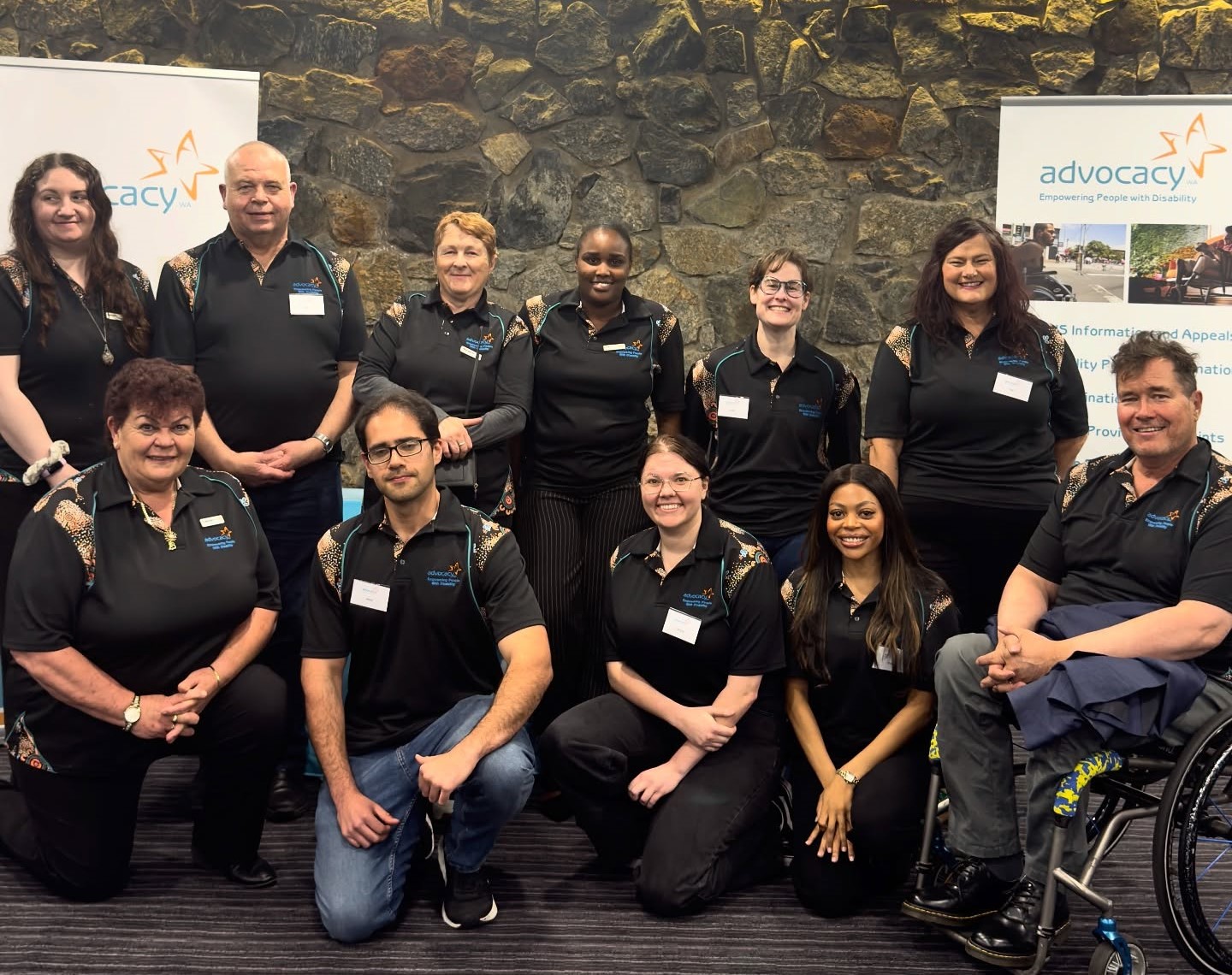
If you would like support to make your workplace, service, event, or community space more accessible, Advocacy WA can help.
We offer a range of workshops and can come out to talk with you about training or an accessibility assessment.
To find out more, contact us at:
Final message
Accessibility is more than ramps.
It is physical, sensory, communication, digital, social, and cultural.
It is about how people enter, understand, move, communicate, participate, and feel.
At Advocacy WA, we believe people with disability should not have to fight for basic access.
Accessibility should be planned, expected, and built into everyday community life.
When we remove barriers, we create communities where more people can be seen, heard, included, and valued.


.png)
.png)
.png)
.png)
.png)


.png)
.png)
.png)
.png)
.png)
.png)
.png)


.png)
.png)

.png)


.png)
.png)
.png)
.png)
.png)

.png)
.png)
.png)
.png)
.png)

.png)
.png)

.png)
.png)